Customer Success as a Project Manager
- Jacob Zych
- Sep 1, 2025
- 3 min read

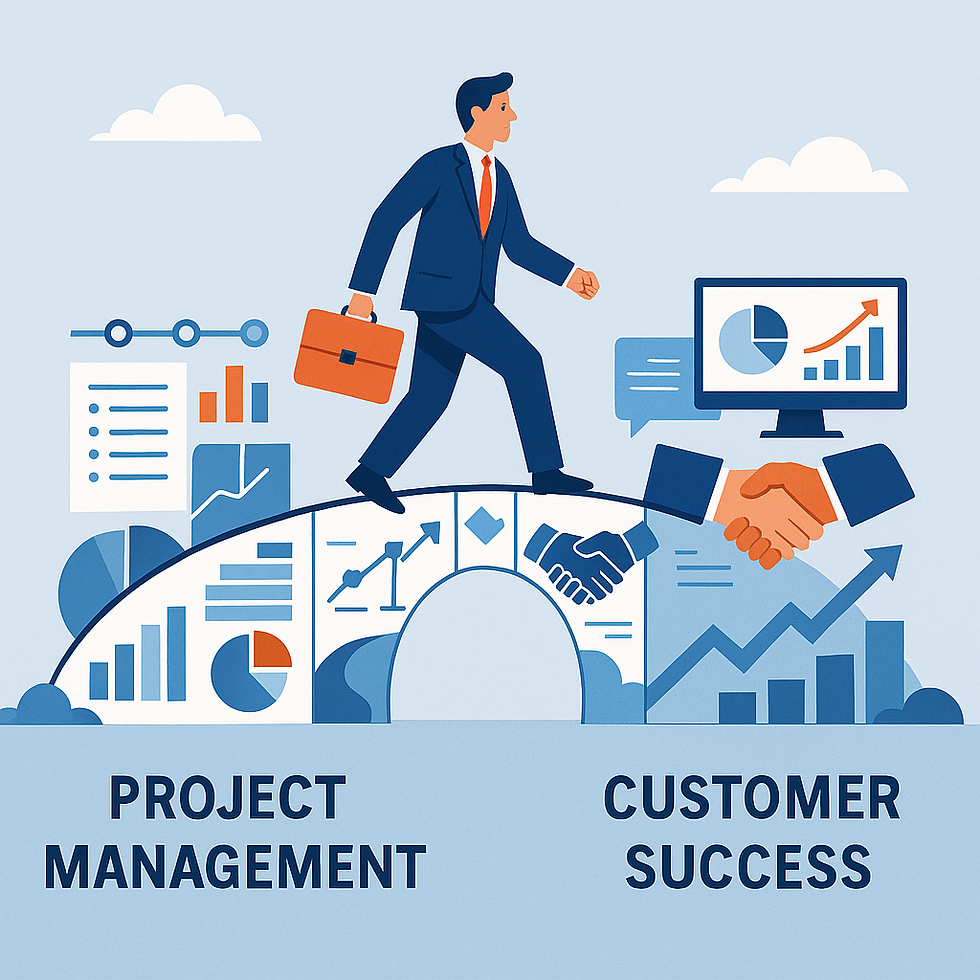
I didn’t plan on working in Customer Success. My career started teaching English overseas, but I’d always been drawn to technology. Growing up, I built my own computers, worked in
DOS, and installed every new version of Windows I could get my hands on. That curiosity eventually led me into project management, where I could use those skills to help companies roll out new software.
What I liked most about project management was the structure. I enjoyed mapping out detailed project plans and seeing them through to go-live. But over time, I noticed I was doing more than managing timelines and budgets. I was configuring systems, training users, and helping teams succeed with the tools. At the time, I didn’t call it “Customer Success,” but looking back, that’s exactly what it was.
When I moved into my first CS role after nine years as a Project Manager, the biggest shift was learning how businesses talked about money (ARR) and contracts (terms, payment structure, renewal details). In project management, those sit in the background. In Success, renewals, agreements, and the ability to explain business value are central. It was new to me, and I had to learn quickly. Still, a lot of what made me effective in project management carried over.
PM Skills That Still Matter in CS
Keeping track of details: Documenting, following up, and making sure tasks don’t get lost builds trust and keeps projects on track. While Success isn’t always about the tactical side, I’ve found that small tasks often turn into quick wins that matter to customers and give you tangible examples to reference during renewal discussions.
Thinking in timelines: Whether it’s a product rollout or a smaller initiative, I naturally think about dependencies and milestones. In CS, timelines aren’t just about my tasks—they’re about helping peers and customers stay on track. Sometimes this means questioning timelines or walking someone through their process to clarify steps and durations. That transparency helps set clear expectations, and it’s a lot better to say a feature was delivered early because I buffered the schedule based on input from the product team.
Being direct and clear: As a PM, I learned that ambiguity creates problems. In CS, that means setting honest expectations and making sure both sides are aligned. I often use written communication—emails or documentation—to reinforce clarity. For example, if we’re aligning on product functionality, I’ll draft a document that lays out expectations, includes feedback, and gives us a reference point later if anyone “forgets” what was agreed to.
What I Had to Change
Not every PM habit carried over. As a PM, I wanted to tackle every request. In CS, I’ve learned that not everything deserves attention. Sometimes the best move is to push back or let another team handle it. Staying focused on what supports the bigger picture is what actually drives progress.
What Customers Notice
Customers and colleagues often comment on the structure I bring. Simple things like having a clear agenda, taking notes, and following up consistently create a sense of order. And when those smaller tasks get done, they build up into something bigger—the ability to show real value during renewal conversations.
Advice for PMs Thinking About CS
If you’re a project manager considering Success, my advice is this: be ready for more autonomy. In project management, the contract defines your path. In Success, you build the path yourself. That freedom can feel overwhelming at first, but it’s also what makes the work exciting. You don’t just deliver the project—you help shape the entire customer journey.
If you are in Project Management or Customer Success, I'd love to hear from you!
What skills from your background have been most valuable in your role?
Have you ever transitioned from Project Management to Success—or vice versa? What stood out to you?
How do you balance tactical tasks with strategic value in your role?

Comments